
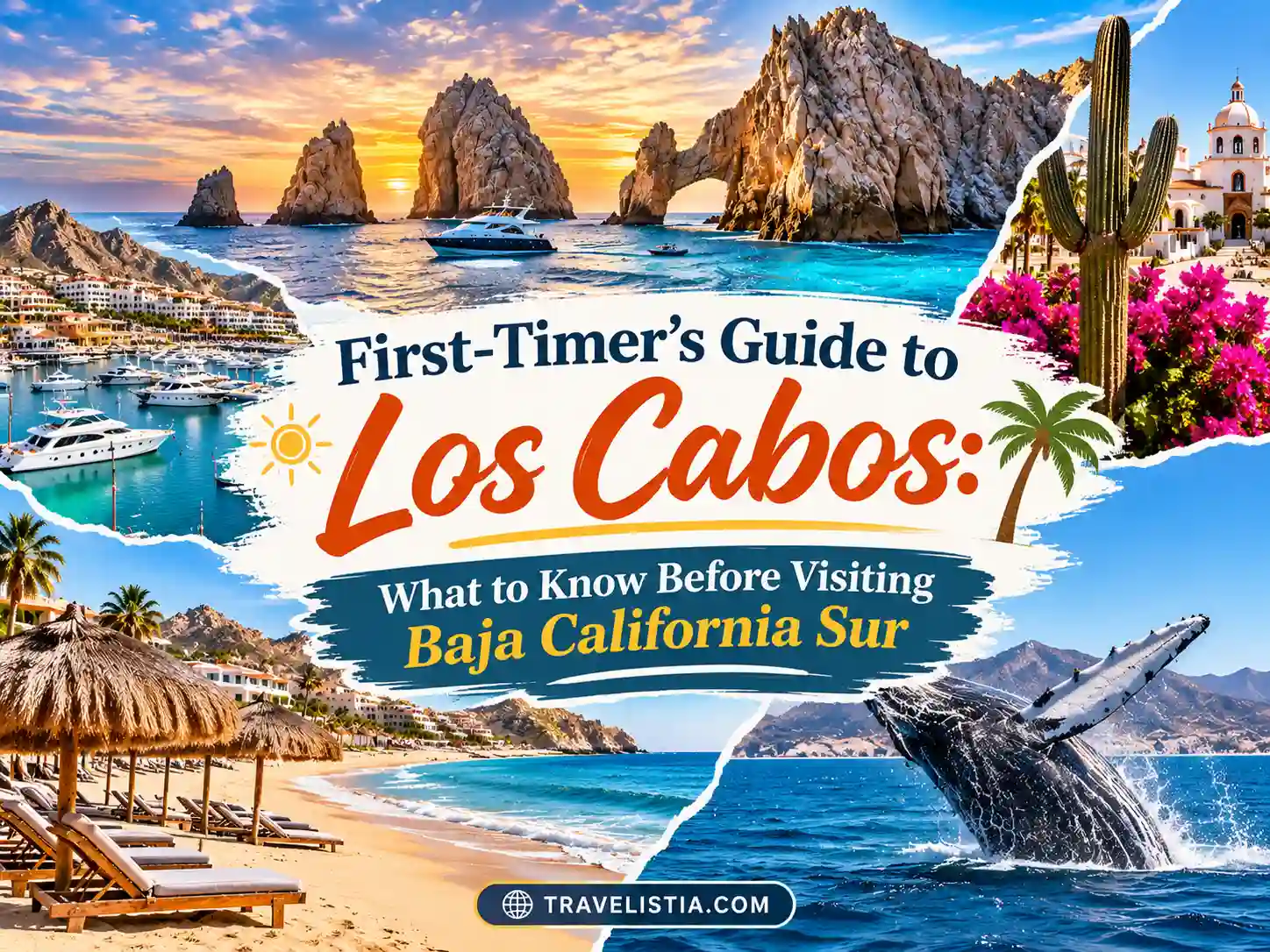
Before traveling to Cabo for the first time, you should know four things. Los Cabos is really two towns linked by a resort strip. Many of its beautiful beaches are not safe for swimming. The best weather runs from November to May. And the region is easy to visit if you plan airport transfers and carry some pesos. Get those right and a first trip to Los Cabos is about as smooth as Mexican beach travel gets.
The rest of this guide fills in the detail: which town suits you, where you can actually get in the water, how long to stay, and the small practical things that catch first-timers out.
What Is Cabo Like? Los Cabos at a Glance
Picture desert meeting sea. Cactus-covered hills and granite cliffs run straight down to the water, and the light is sharp and dry most of the year. That contrast is what Cabo looks like, and it surprises people who expect a jungle-green tropical coast.
Los Cabos sits at the very southern tip of the Baja California Sur peninsula. Here the Pacific Ocean on one side meets the Sea of Cortés on the other. The two bodies of water behave very differently, which matters a lot once you start choosing beaches.
A few Cabo facts worth knowing before you land:
- Los Cabos is a municipality, not a single town. It covers Cabo San Lucas, San José del Cabo and the coastal strip between them.
- It is dry. Rain falls on only a handful of days a year, mostly during late-summer storms.
- The Sea of Cortés is extraordinarily rich in marine life. Whales, sea lions, rays and huge schools of fish are common sights.
- Most visitors fly into Los Cabos International Airport (SJD), which sits just north of San José del Cabo.
So what is Cabo like day to day? It depends heavily on where you stay. That choice comes first.
Choosing Your Base: The Two Cabos and the Corridor
First-timers often book “Cabo” without realizing they are choosing between three quite different places. Roughly 20 miles separate the two towns, with the resort zone running between them.
Cabo San Lucas: The Marina, Nightlife and El Arco
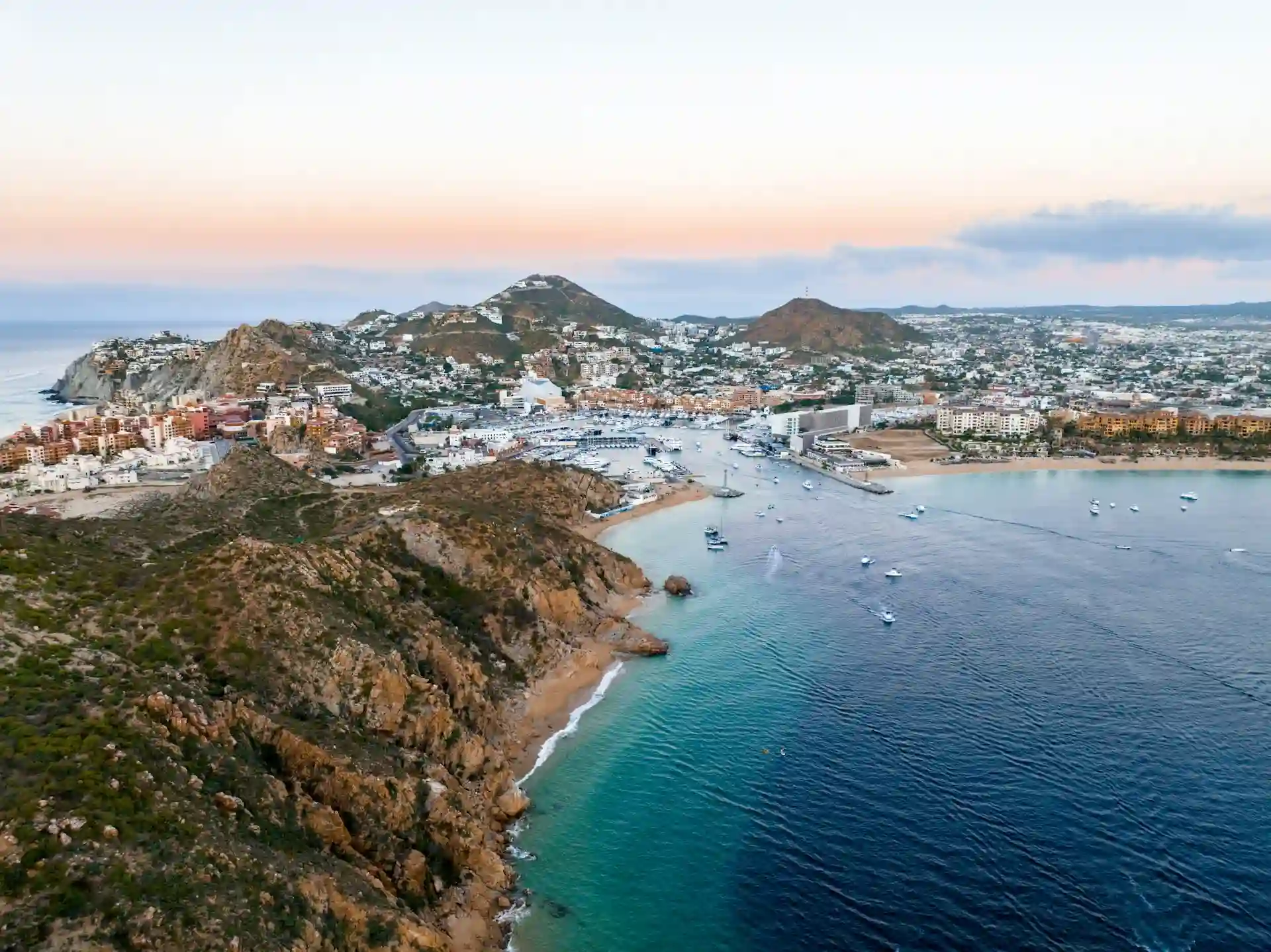
Cabo San Lucas is the busy one. The marina is its center of gravity, lined with restaurants, bars, tour operators and yachts. At night the downtown fills with music, and the party reputation is earned.
It is also where you find El Arco, the famous rock arch at Land’s End, plus Medano Beach, the area’s best-known swimmable beach. If you want to walk to dinner, book boat trips on a whim and have nightlife on your doorstep, stay here. Is Cabo fun? In Cabo San Lucas, very much so, though light sleepers should pick a hotel away from the marina strip.
San José del Cabo: Colonial Streets and the Art Walk
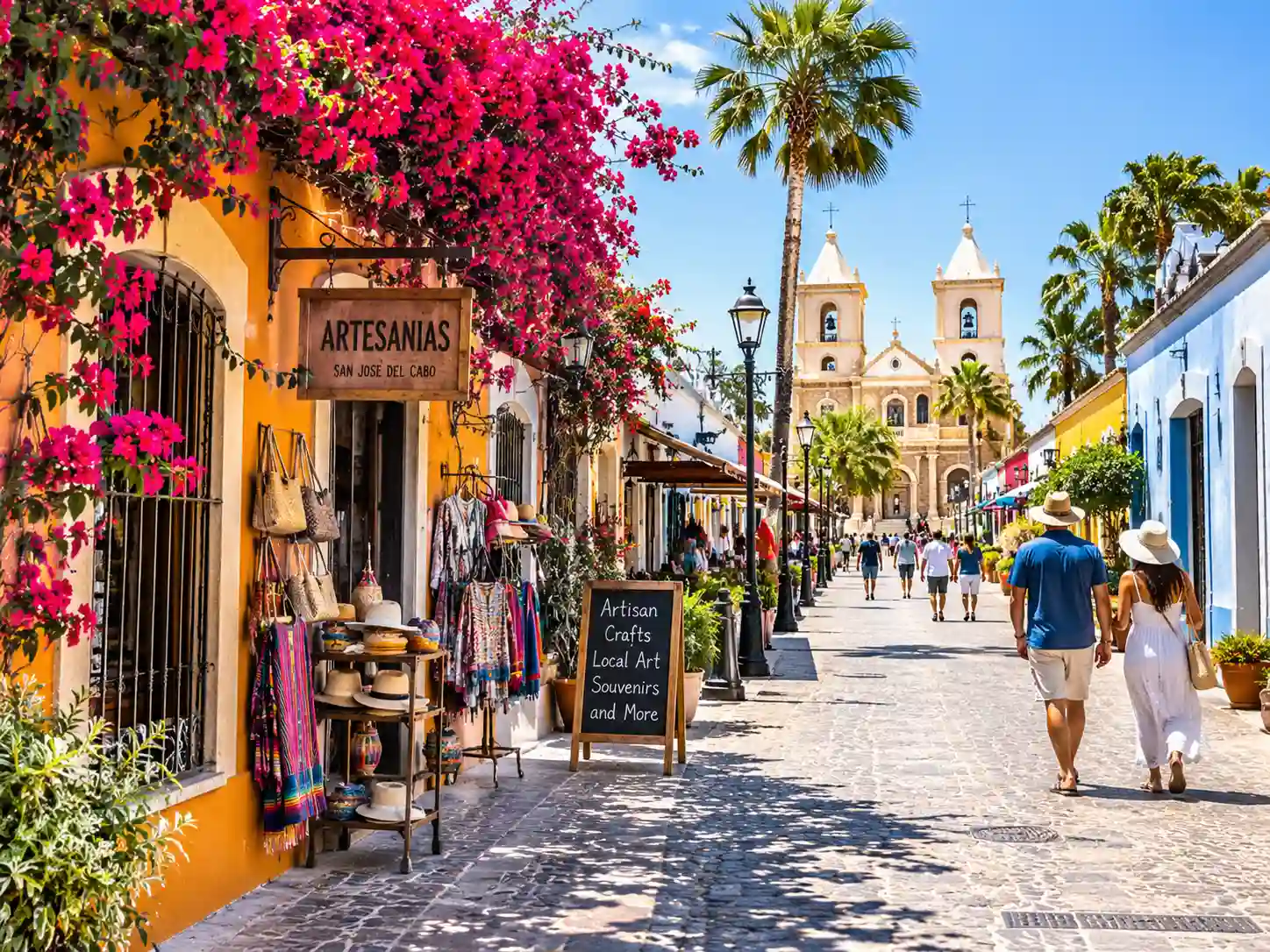
San José del Cabo feels like a different trip. Its historic center has a whitewashed mission church, a leafy plaza and narrow streets packed with galleries and restaurants. The pace is slower and the dining scene leans more refined than rowdy.
The highlight for many visitors is the Thursday evening Art Walk in the Gallery District, which runs through the high season (roughly November to June). Galleries open late, and the streets fill with street food and live music. Couples, families with young kids and anyone who wants a calmer base tend to prefer San José. It is also closer to the airport.
The Tourist Corridor: Resorts, Golf and Calm Coves
The Corridor is the roughly 18-mile stretch of highway between the two towns. This is where most of the large all-inclusive and luxury resorts sit, along with several championship golf courses.
It suits travelers who plan to stay put at the resort for most of the trip. The trade-off is distance: you will need a taxi, Uber or rental car to reach either town. The upside is access to some of the best snorkeling coves in the region, which we cover below.
Can You Swim in Cabo? What to Know About the Ocean
Yes, you can swim in Cabo, but only at certain beaches. This is the single most important thing to understand before your trip, and it is the question first-timers ask most often.
The Cabo ocean is not one uniform body of water. Beaches facing the Sea of Cortés, especially those inside protected bays, are often calm and safe. Beaches facing the open Pacific, and several along the more exposed stretches of coast, can be genuinely dangerous even on a sunny, still-looking day. Many resorts sit on gorgeous sand where swimming is simply not allowed.
Why Can’t You Swim in Cabo Everywhere?
Three forces make some Cabo beaches unswimmable:
- Shore break. The seabed drops off steeply close to shore. Waves don’t roll in gently; they rise and slam down right at the water’s edge, strong enough to knock an adult off their feet.
- Rip currents and undertow. Water pulled back out to sea after each wave can drag swimmers away from shore quickly, even in waist-deep water.
- Open Pacific swell. Swells travel thousands of miles across the Pacific with nothing to slow them down before they hit Baja’s coast.
That is why Cabo beaches can look inviting and still be off-limits. Divorce Beach, on the Pacific side of Land’s End, is a classic example: stunning to look at, dangerous to swim. Playa Solmar, in front of several Pacific-facing hotels, is another. If you are wondering whether you can get in the ocean in Cabo at your resort, check with the front desk before you book, not after you arrive.
Swimmable Beaches in Cabo (and Ones to Admire From the Sand)
These are the Los Cabos beaches most visitors can enjoy in the water when conditions are normal:
| Beach | Area | Why go |
|---|---|---|
| Medano Beach | Cabo San Lucas | Calm bay water, beach clubs, water sports, views of El Arco |
| Lover’s Beach (Sea of Cortés side) | Land’s End, Cabo San Lucas | Reached by water taxi; swim on the bay side only, not the Pacific side |
| Chileno Beach | Corridor | Clear water, excellent snorkeling, facilities and lifeguards |
| Santa María Bay | Corridor | Sheltered horseshoe cove, a marine sanctuary with great snorkeling |
| Palmilla Beach | Near San José del Cabo | Protected by a point; calm water favored by families |
Medano is the default answer to “where can you swim in Cabo San Lucas.” It is lively, easy to reach on foot from downtown and the marina, and the water is usually gentle. Chileno and Santa María are the picks for snorkeling, with reef fish just a few strokes from the sand. Bring water shoes for the rocky edges.
Other beaches are better enjoyed from a lounger. Treat Divorce Beach, Solmar and most of the long open Pacific stretches as places to walk, photograph and watch sunsets.
Is It Safe to Swim in Cabo San Lucas? Flag and Water Rules
At the swimmable beaches, swimming in Cabo San Lucas is generally safe if you follow a few rules:
- Read the flags. Many public beaches post colored flags. Green means calm conditions, yellow means caution, and red means do not swim.
- No lifeguard, no flags, no certainty? Stay out. Conditions change with tides and swell, even at normally calm beaches.
- Watch the locals. If nobody is in the water, there is usually a reason.
- Learn to escape a rip. Swim parallel to the shore, not against the current, until you are free of it.
- Respect boat lanes. Medano has busy marked areas for boats and jet skis; swim inside the buoyed zones.
So can you swim in the ocean in Cabo San Lucas? Absolutely, at the right beach and on the right day. Pick your spot well and the water here is one of the best parts of the trip.
When to Go to Cabo (and When Not To)
The sweet spot for going to Cabo is November through May. Days are dry and sunny, with highs mostly in the low-to-mid 80s °F, and evenings cool enough for a light layer in midwinter.
This window also covers whale-watching season, roughly December to April. Humpback and gray whales migrate to Baja’s warm waters to breed and calve, and sightings from tour boats are close to guaranteed at the peak. You can sometimes spot spouts straight from the beach.
So when should you not go to Cabo? Consider these trade-offs:
- Late summer heat. July through September is hot and humid, with temperatures often in the 90s °F.
- Hurricane season. The Eastern Pacific season runs from mid-May to the end of November, with the highest risk usually in August, September and early October. Most weeks pass without trouble, but travel insurance is wise.
- Spring break and holidays. March, Christmas and New Year bring the biggest crowds and highest prices, especially in Cabo San Lucas.
If you want the best balance of weather, whales and value, aim for late January to early March, avoiding spring break dates.
How Long to Stay in Cabo?
Five to seven days is the right length for a first visit. That gives you enough time to settle in, enjoy a few lazy beach days and fit in two or three excursions without rushing.
A rough split that works for most travelers:
- 3–4 days: A long weekend. Pick one base, do an El Arco boat trip and one other activity.
- 5–7 days: The classic trip. Time for snorkeling, a day in San José del Cabo, a whale or sunset cruise, and genuine downtime.
- 8+ days: Add day trips to Todos Santos, La Paz or Cabo Pulmo National Park.
Traveling to Cabo: Airport Arrival and Getting Around
Most people traveling to Cabo fly into Los Cabos International Airport (SJD). There are direct flights from many U.S. and Canadian cities. The airport sits about 15 minutes from San José del Cabo and around 40–50 minutes from Cabo San Lucas.
Getting Past the “Shark Tank”
After customs, you walk through a hall of people offering taxis, tours, “free” transfers and welcome drinks. Locals and repeat visitors call it the shark tank. Most of these offers are timeshare pitches in disguise.
The fix is simple: keep walking. Don’t stop to chat, and head straight outside, where official transfer companies wait with name signs. The easiest way to skip the whole scene is to book private SJD airport transportation to Cabo San Lucas and San José del Cabo before you fly, so a driver is already waiting with your name. Keep the confirmation ready on your phone before you land.
Getting Around Los Cabos
You have several options once you arrive:
- Pre-booked shuttles. The easiest way to travel to Los Cabos, Mexico from the airport to your hotel. Book a round trip so the return is sorted too.
- Uber. Available and usually cheaper than taxis around town. Pickup rules at the airport and some resorts are restricted, so don’t count on it for arrival.
- Taxis. Plentiful but pricier. Agree the fare before you get in.
- Rental car. Worth it if you plan day trips. The main highway between the two towns is in good condition, though city driving can be hectic.
- Local buses. Cheap and frequent along the Corridor, if you are comfortable with a little adventure.
Pesos, Dollars and Tipping
U.S. dollars are accepted almost everywhere in the tourist zones, and cards work at hotels, most restaurants and larger shops. Still, carrying some Mexican pesos is one of the smartest travel tips for Cabo San Lucas.
Here’s why. When you pay in dollars, the vendor sets the exchange rate, and it is rarely in your favor. Pesos also make small purchases easier: tacos from a street stand, a bus fare, tips and market stalls.
A few money habits that help:
- Withdraw from ATMs inside banks or malls rather than standalone machines on the street.
- When a card machine asks to charge you in dollars or pesos, choose pesos. Your own bank usually gives a better rate.
- Tip around 10–15% at restaurants, and carry small bills for drivers, housekeeping and tour guides.
- Check whether service is already included on the bill, which is common at some tourist restaurants.
Is Cabo Safe for First-Time Visitors?
For a first time visit to Cabo San Lucas, safety is a fair question. The U.S. State Department rates Baja California Sur at Level 2: Exercise Increased Caution, the same level it assigns to several popular European countries. It places no specific travel restrictions on U.S. government employees visiting Cabo San Lucas or San José del Cabo.
In practice, millions of visitors come every year without problems. Standard travel sense goes a long way:
- Stick to well-known tourist areas, especially at night.
- Use pre-booked transfers, Uber or hotel-arranged taxis.
- Keep valuables out of sight and use your hotel safe.
- Drink responsibly, and never leave a drink unattended.
- Don’t buy or use drugs. It is illegal and the most common way visitors get into real trouble.
Advisory levels can change, so check the State Department’s Mexico page a week or two before you fly.
Best Things to Do on Your First Trip
You could spend a week on a sunbed and leave happy. But a few experiences define a first trip, and they belong in any guide to Cabo San Lucas:
- Boat trip to El Arco. Take a glass-bottom boat or water taxi from the marina to Land’s End. You’ll pass sea lions, Lover’s Beach and the arch itself. It’s best in the morning, when the water is calmest.
- Whale watching (December–April). Small boats get closer and more personal than big catamarans. Choose an operator that follows distance rules.
- Snorkeling at Santa María or Chileno. Go early, before the tour boats and crowds arrive.
- Sunset cruise. Watching the sun drop behind the Pacific from the water is the classic Cabo evening.
- Thursday Art Walk in San José del Cabo. Combine it with dinner in the historic center.
- Day trip to Todos Santos. A charming artsy town on the Pacific coast, about an hour’s drive north.
- Cabo Pulmo National Park. A protected reef on the Sea of Cortés, famous for diving and snorkeling. It’s a long day out, but unforgettable.
Is Cabo Worth It?
For most first-timers, yes. Is Cabo nice? The scenery alone answers that: few places pair desert mountains and two different seas so dramatically. Cabo San Lucas delivers energy and nightlife, San José del Cabo delivers charm and food, and the Corridor delivers rest.
It is not a budget destination, especially in high season, and it is not the place for long swims off every beach. But if you go in the right months, stay in the area that matches your style and plan your water time around the safe beaches, Cabo is easily worth it.
Tips for Traveling to Cabo San Lucas: A Quick Checklist
Run through this list before you go:
- Passport valid for your whole stay; keep your immigration entry record safe until you leave
- Round-trip airport transfer booked, with confirmation saved on your phone
- Hotel checked for a swimmable beach, or a pool you’ll actually use
- Some pesos for tips and small purchases
- Reef-safe sunscreen, a hat and polarized sunglasses
- Water shoes for rocky snorkel coves
- Travel insurance, especially for trips between June and November
- Bottled or filtered water only; don’t drink from the tap
- Major tours (whales, El Arco, sunset cruise) booked for peak season dates
With these basics sorted, your first trip to Los Cabos can be about the good stuff: clear water, golden light on the cliffs and a few unhurried days at the end of the Baja peninsula.
Frequently Asked Questions
What should you not miss in Cabo San Lucas?
Don’t miss a boat trip to El Arco at Land’s End, the rock arch that defines Cabo San Lucas. Pair it with a stop at Lover’s Beach and a look at the sea lion colony. Beyond that, the essentials are a sunset cruise, a swim or paddle at Medano Beach, snorkeling at Chileno or Santa María Bay, and whale watching if you visit between December and April. If you have an evening free, the Thursday Art Walk in nearby San José del Cabo is well worth the short drive.
Has Cabo been affected by the cartel?
Yes, at times. Like much of Mexico, Baja California Sur has organized crime, and Los Cabos saw a sharp rise in homicides in 2017 and 2018 after rival groups fought for control. Most of that violence was between criminal groups, away from hotel zones, and tourists were rarely targeted. Security has since been reinforced, and the state now sits at a U.S. State Department Level 2 advisory (“Exercise Increased Caution”) because of crime. Occasional security alerts still happen, so check the latest advisory before you travel and stick to well-traveled areas.
What are some important things to know before traveling to Los Cabos?
Five things matter most. First, Cabo San Lucas is lively while San José del Cabo is quiet, so pick your base to match your style. Second, not every beach is swimmable, so follow the flags and stick to protected beaches. Third, November to May has the best weather and whale season. Fourth, book your airport transfer in advance and walk straight past the timeshare sellers at SJD. Fifth, carry some pesos for tips and small purchases, since paying in dollars usually means a worse exchange rate.
Can I brush my teeth with tap water in Cabo?
The safest choice is to brush your teeth with bottled or purified water. Tap water in Los Cabos is not considered safe to drink, and that includes swallowing small amounts while brushing. Many large resorts treat their water and say it is fine for brushing, so ask at check-in. If you’re unsure, or staying in a rental or smaller hotel, keep a bottle of water by the sink. Ice in hotels and established restaurants is generally made from purified water.
Is it safe to swim in Cabo San Lucas?
Yes, at the right beaches. Medano Beach in Cabo San Lucas, plus Chileno, Santa María and Palmilla nearby, are generally safe in normal conditions. Pacific-facing beaches such as Divorce Beach and Playa Solmar have dangerous shore break and rip currents and are not safe for swimming. Always check the flag: green means swim, yellow means caution, and red or black means stay out.
What is the best month to visit Cabo?
February is often considered the best single month to visit Cabo. It brings dry, sunny weather in the low 80s °F, peak whale-watching season and fewer crowds than Christmas or spring break. More broadly, November through May offers the best conditions. Avoid August through early October if you dislike heat or want to stay clear of the peak of hurricane season.
Do you need pesos in Cabo?
You don’t strictly need pesos, since U.S. dollars and cards are accepted at most tourist businesses. But carrying some pesos saves money and hassle. Paying in dollars usually means the business’s exchange rate, which is rarely good. Pesos are better for tips, taxis, beach parking, markets and taco stands. Withdraw them from ATMs inside banks or malls, and choose to be charged in pesos when paying by card.

