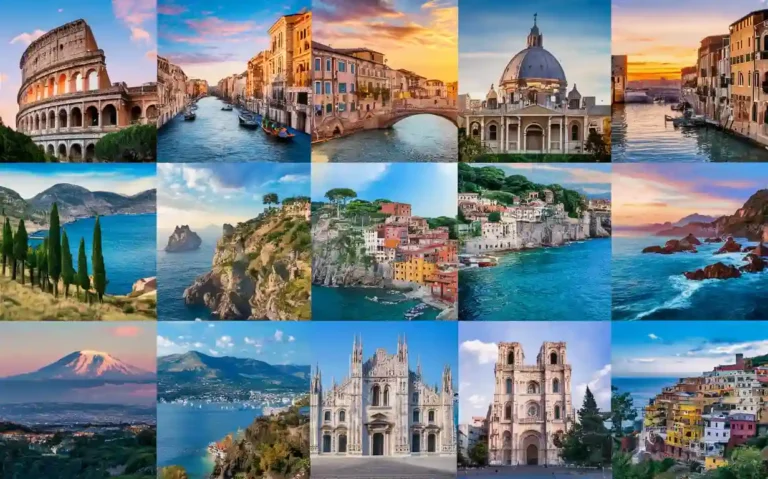
Rome ranks near the top of nearly every traveler’s bucket list, and for good reason. Few destinations on earth pack three thousand years of history into a single walkable core, the Colosseum, the Vatican, the Pantheon, and a dozen piazzas where Bernini fountains splash beside open-air cafés. But here’s what guidebooks rarely tell first-time visitors: Rome is bigger and hillier than it looks on a map.
The distance between its headline sights can swallow your day in heat, traffic, and tired feet, leaving you with a short list of landmarks and a long list of regrets. A guided tour of Rome by golf cart offers a smarter way to take in this remarkable city, and it has quietly become one of the most popular ways to explore it.
I’ll be honest — when my family first suggested skipping the walking route in favour of a golf cart tour, I was sceptical. It felt like cheating on a city built for wanderers. But by the time we’d rolled past the Colosseum, cut through a narrow lane in Trastevere that no bus could have managed, and arrived at the Pantheon without a single blister, I’d completely changed my mind. With two kids and a mother-in-law in tow, the cart didn’t just make Rome easier — it made it possible. We covered more ground in one morning than most visitors manage in a full day on foot, and everyone in the group was still energised enough for a long lunch and an afternoon on our own.
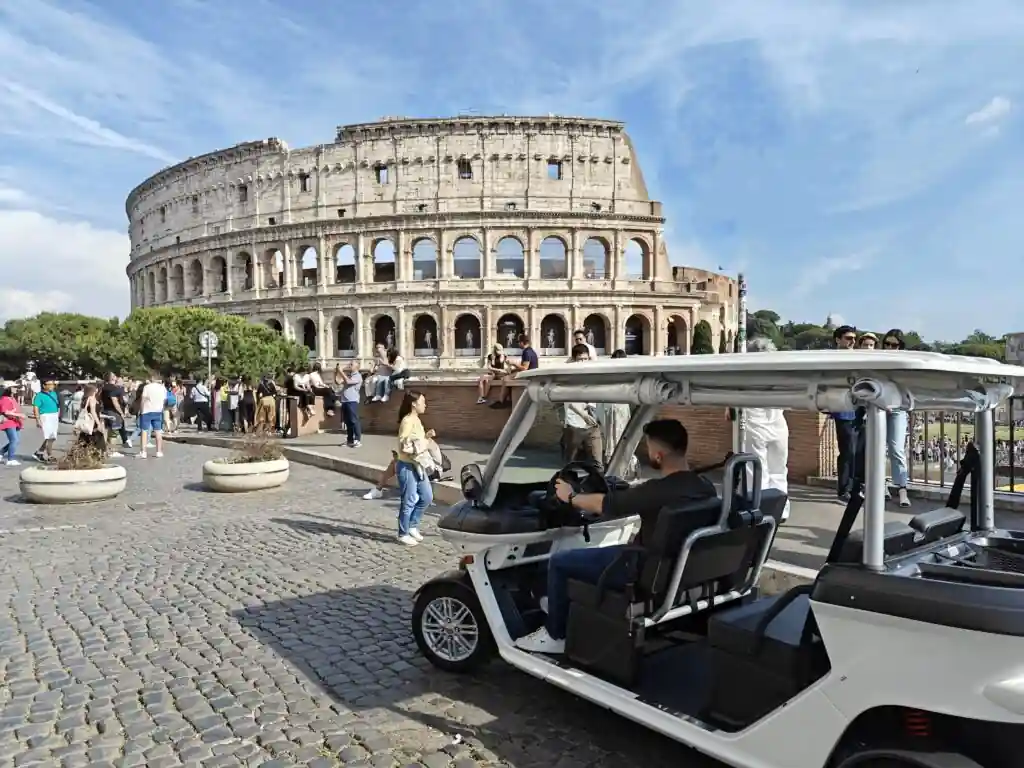
Enter the guided golf cart tour. Several operators now run private electric cart tours through Rome’s historic centre, typically pairing a local guide with a small group of two to six people. The carts move easily through narrow streets that large vehicles can’t access, slip past traffic that would slow a taxi to a crawl, and stop wherever a view, a story, or a photo demands attention. We booked ours through Viator, where you can compare operators, read verified reviews, and lock in a time slot without paying upfront.
These compact carts move easily through narrow streets that large vehicles can’t access, slip past traffic that would slow a taxi to a crawl, and stop wherever a view, a story, or a photo demands your attention.
Why a Rome by Golf Cart Belongs on Your Itinerary
Touring Rome on foot is genuinely wonderful — until it isn’t. The city is bigger than first-timers expect, the cobblestones are harder on your feet than they look, and the distances between headline sights can quietly swallow two to three hours of a short trip. Golf Cart Tours in Rome don’t replace the walking experience — they supplement it. You ride between the major landmarks, then walk and explore each one on foot. The result is that you arrive at every stop with energy rather than arriving at fewer stops exhausted.
For travelers planning a destination-packed trip, the advantages add up quickly:
- Comfort and convenience — ride between landmarks instead of trekking through the heat, arriving fresh at each stop.
- A private, personalized experience — the route is yours, shaped around what you most want to see rather than a rigid group schedule.
- More destinations in less time — cover ground in a single half-day that would take most visitors two full days on foot.
- Electric, silent, and eco-friendly — a clean, quiet way to travel that respects a historic center already standing for millennia.
The Iconic Destinations You’ll Cover
One of the biggest frustrations of a short trip to Rome is choosing among must-see destinations. A well-designed golf cart route removes that dilemma by linking the city’s greatest hits into one seamless journey. Typical stops include:
The Colosseum
The Colosseum — completed in 80 AD, it is the largest amphitheater ever built and could hold an estimated 50,000 to 80,000 spectators according to the Colosseum’s official records. Gladiatorial contests were held here for over four centuries before the practice was banned in 435 AD. For skip-the-line Colosseum tickets, book directly through the official Colosseum ticketing site — third-party resellers charge significantly more and availability is often the same.
St. Peter’s Basilica
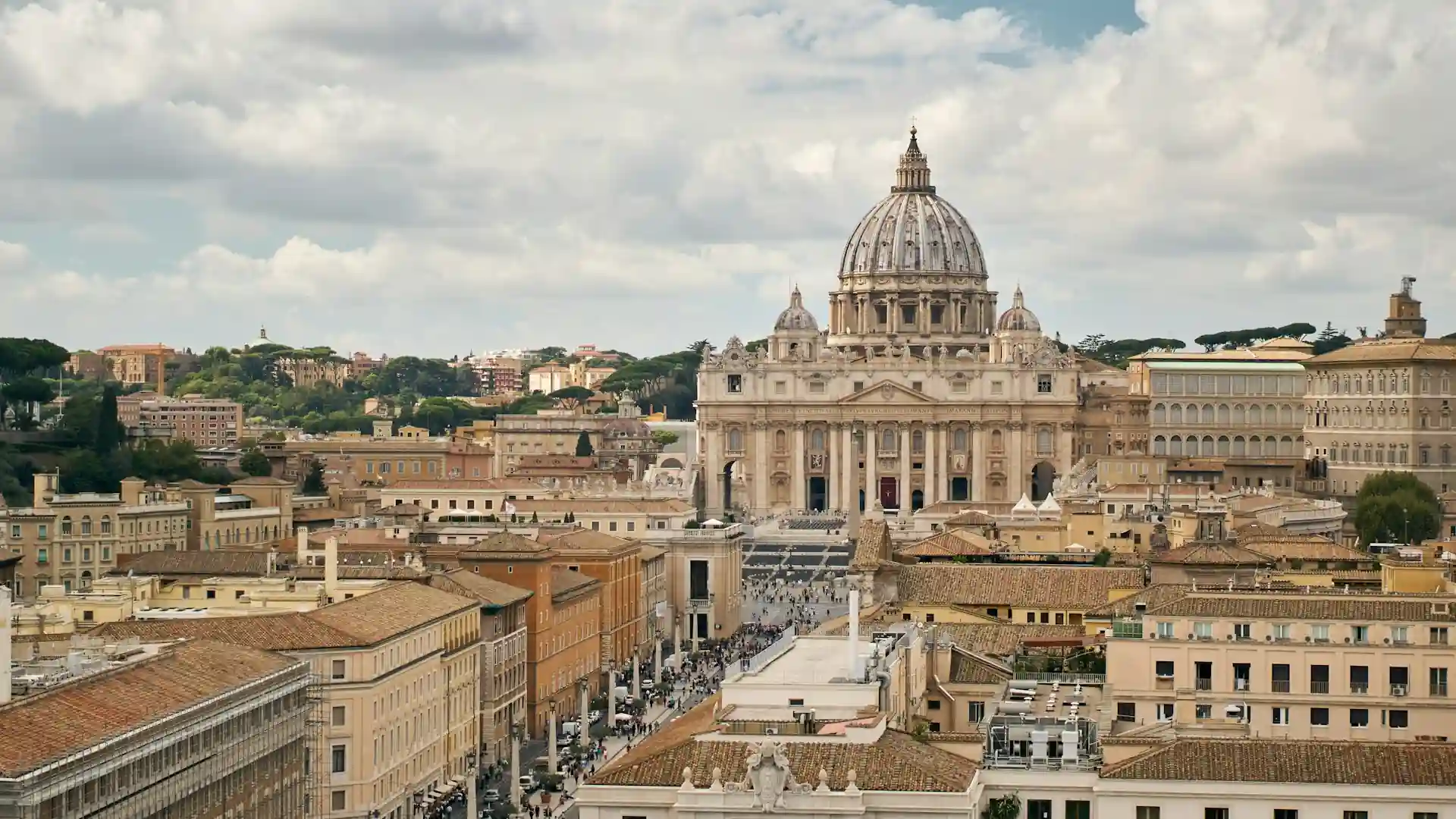
St. Peter’s Basilica holds a detail that surprises many visitors: while the Basilica of Our Lady of Peace in the Ivory Coast is often listed as the largest church in the world by overall dimensions, St. Peter’s remains the largest by interior measure, with roughly 22,000 square meters of flooring. What St. Peter’s does undeniably hold is Michelangelo’s Pietà, completed when he was just 24 years old and the only work he ever signed—reportedly after overhearing visitors attribute it to another sculptor. The iconic dome he designed was completed in 1590, about 26 years after his death, and it still defines Rome’s skyline more than four centuries later.
The Pantheon
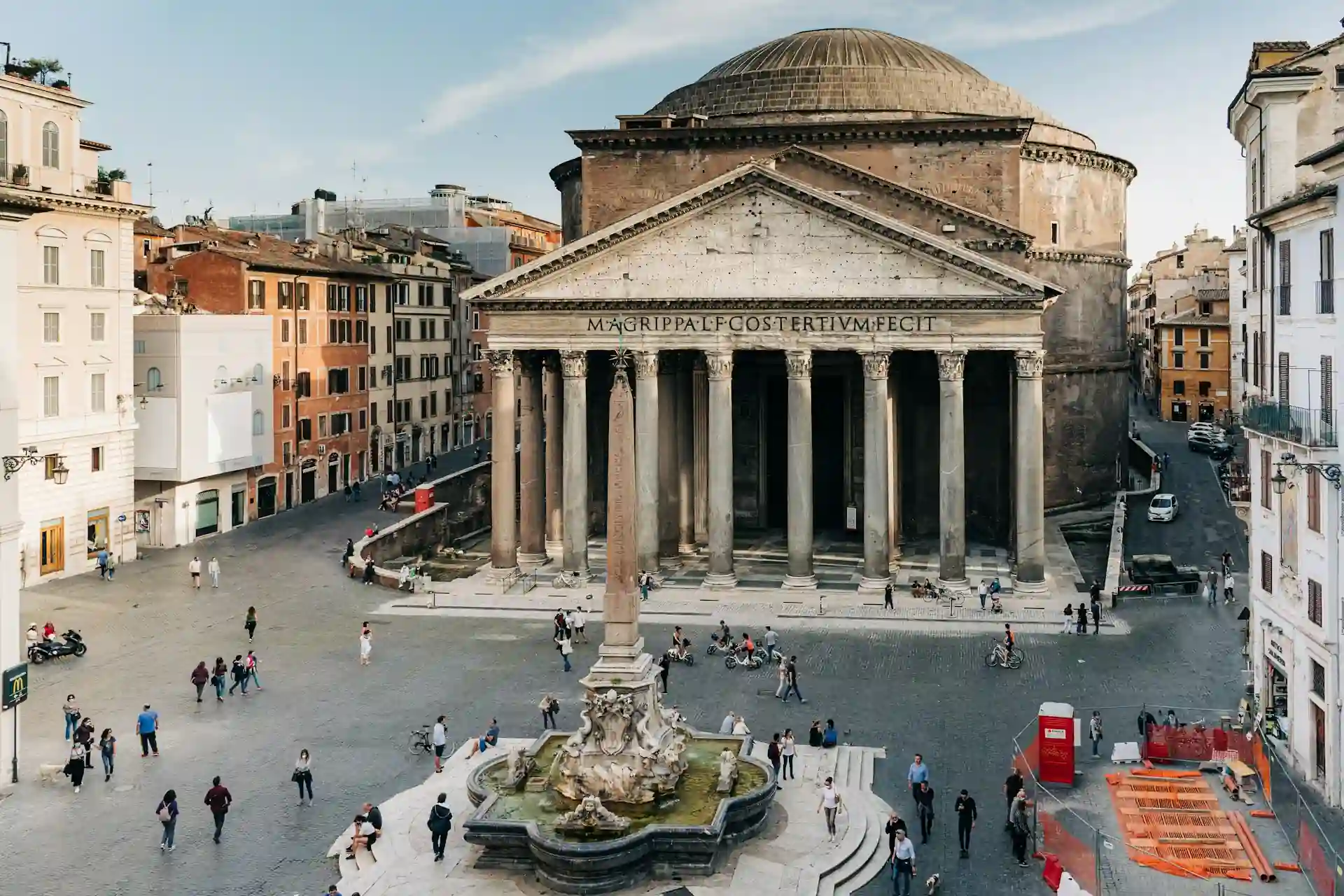
The Pantheon, rebuilt between 118 and 125 AD under Emperor Hadrian, remains one of the best-preserved ancient monuments in Rome. Its magnificent dome, measuring 43.3 meters in diameter, is cast from unreinforced concrete and remained unsurpassed in scale until the great Renaissance domes. To this day, it retains the record as the largest unreinforced concrete dome ever built. The 9-meter oculus at its crown is completely open to the elements; when it rains, water falls directly onto the floor, where it is harmlessly evacuated through a slightly convex flooring system and 22 ancient drainage holes, part of a system designed nearly 1,900 years ago and still functioning today.
The Trevi Fountain
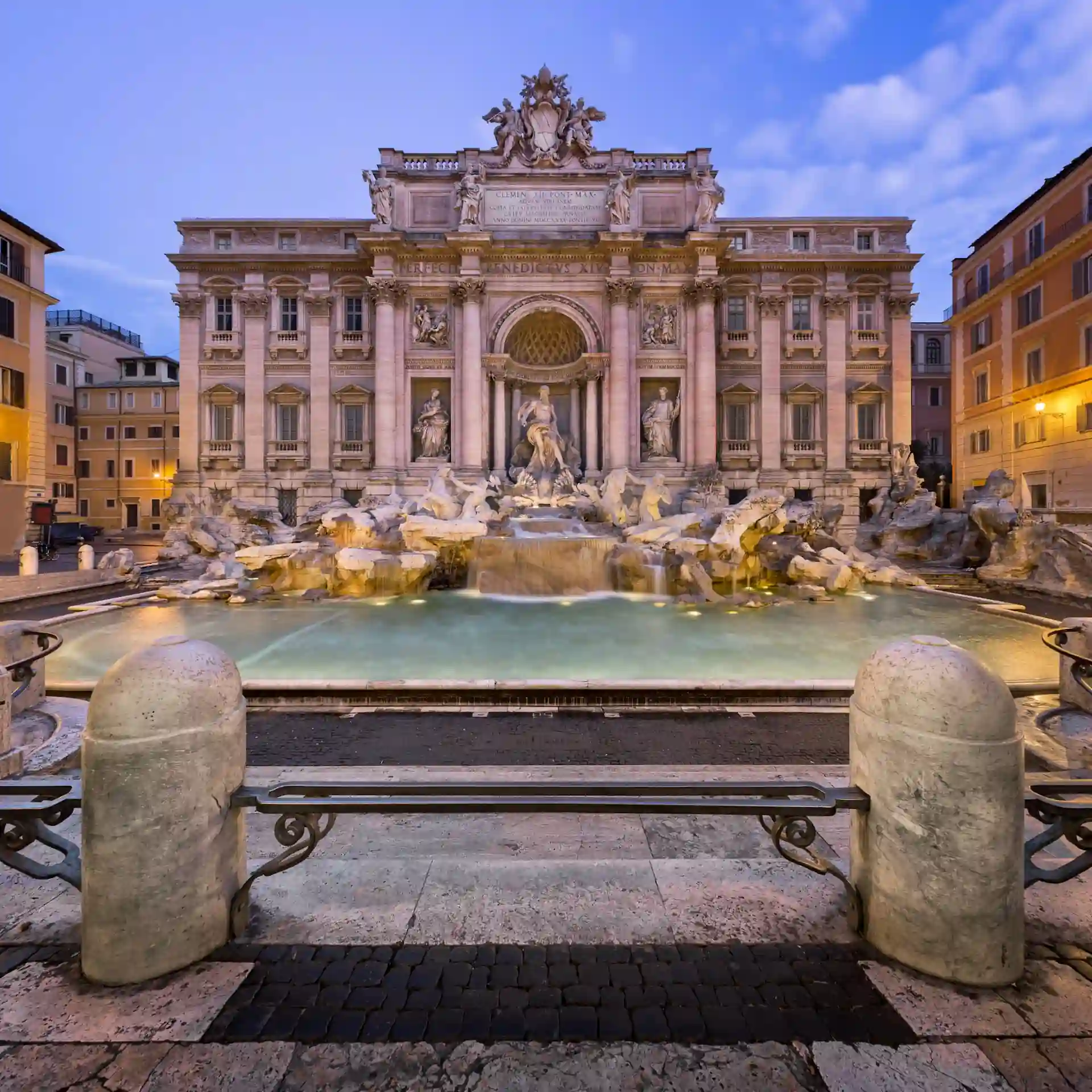
The Trevi Fountain collects an estimated €1.5 million in coins every year — all of which is donated to a Rome-based charity that funds food programs for people in need. The tradition of throwing a coin over your left shoulder with your right hand comes from a 1954 film, Three Coins in the Fountain, not from ancient Roman practice. The fountain itself was only completed in 1762, making it one of the newer landmarks on your route — though it draws more visitors daily than almost any other site in the city. The golf cart approach lets you arrive from the narrow side streets rather than the main tourist entrance, which your guide will use to your advantage.
Piazza Navona
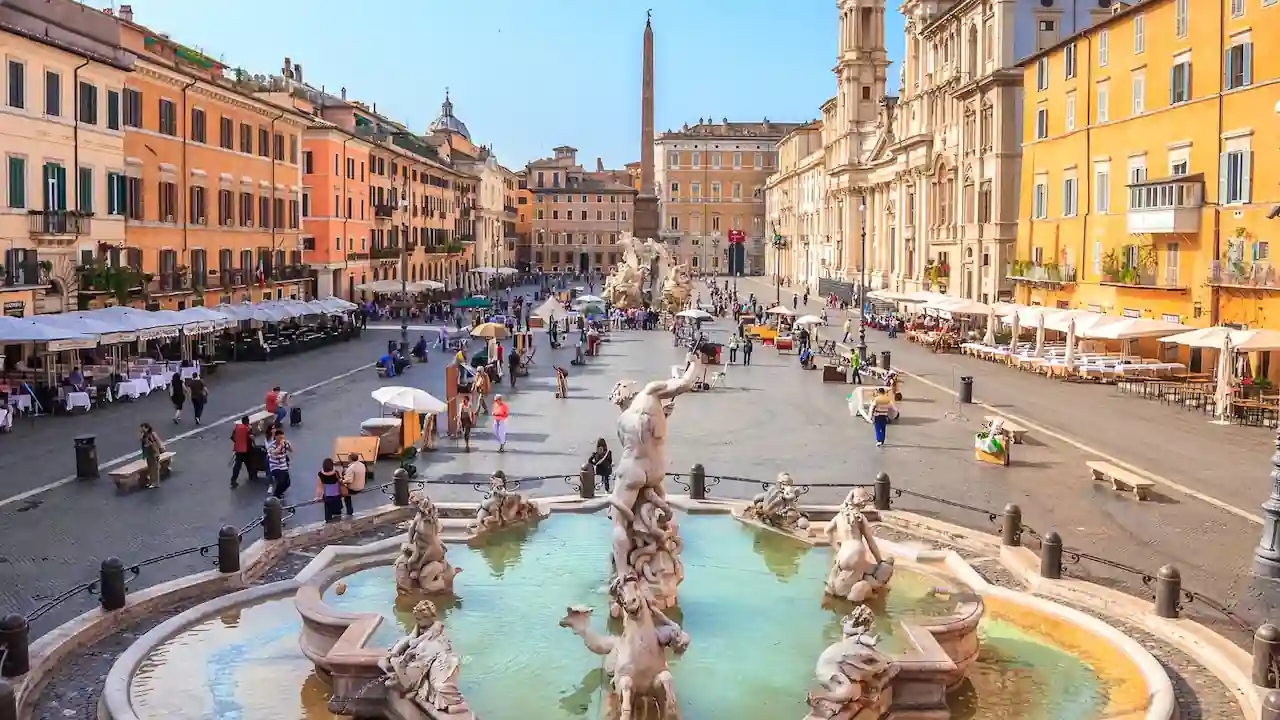
Piazza Navona sits directly on top of the Stadium of Domitian, built in 86 AD for athletic competitions — you can still visit the original ancient foundations underneath the piazza today. The oval shape of the square traces the exact outline of the 30,000-seat stadium that once stood here. Its centrepiece, Bernini’s Fountain of the Four Rivers, represents the four great rivers of the continents known at the time — the Nile, Danube, Ganges, and Río de la Plata. Bernini deliberately sculpted the Nile figure with a veiled head, widely interpreted as a jab at rival architect Borromini’s nearby church of Sant’Agnese — though historians debate whether the rivalry was actually that petty.
Trastevere
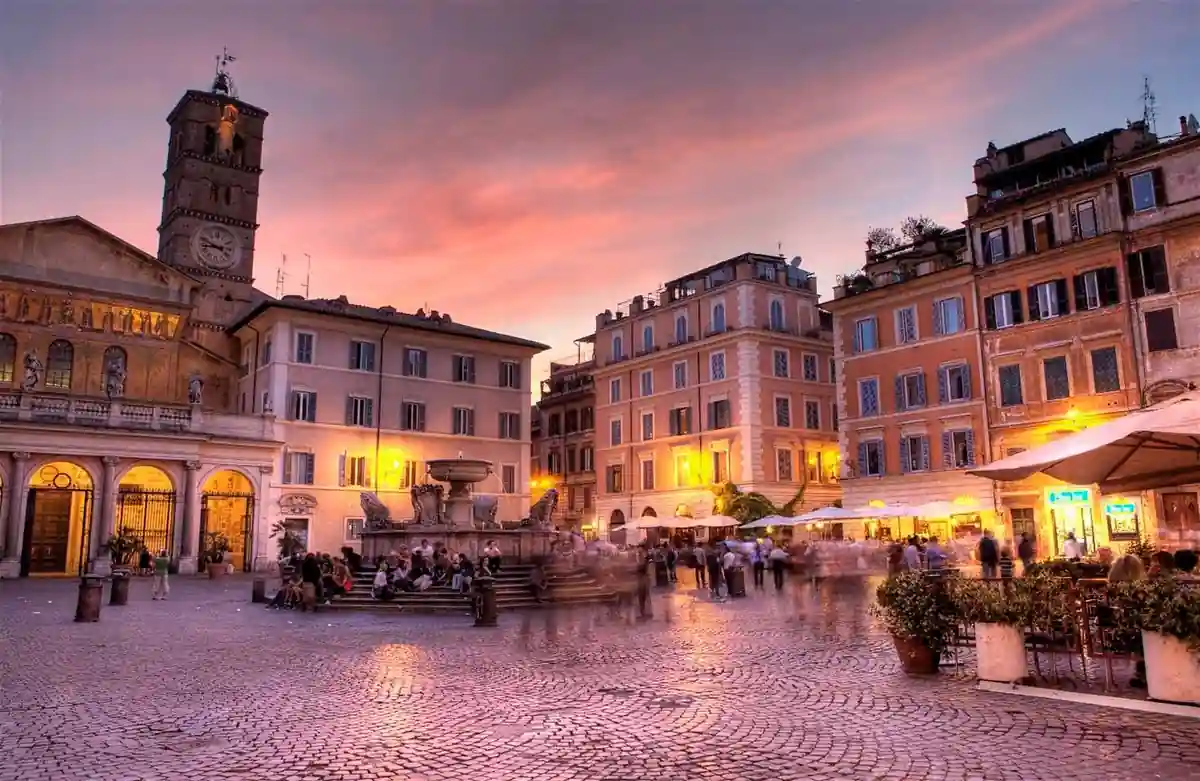
Trastevere translates literally as “across the Tiber” and was historically Rome’s working-class neighbourhood — home to Jewish and Syrian immigrant communities in the ancient city, later to tanners, millers, and river workers. Today it has the highest concentration of pre-medieval churches in Rome, several of which most tourists walk past without recognising. The Santa Maria in Trastevere basilica, tucked into its central piazza, contains some of the oldest Christian mosaics in the world, dating to the 12th century. Your guide will likely time this stop for late morning, when the neighbourhood’s residents are still out and the tourist crowds haven’t arrived from the centre.
Because your guide adjusts the route in real time, you experience these destinations at their best — slipping into a quiet piazza just before the tour buses arrive, pausing for a gelato exactly when you need one, or rerouting around a Vatican event without missing a beat.
The Travelers Who Love This Format Most
The honest answer is that almost everyone enjoys it, but a few types of travelers find it especially rewarding.
Families and Multi-Generational Trips
Children stay engaged because the landmarks come quickly and the ride itself is part of the fun. Grandparents stay comfortable because they aren’t walking for hours on end. Everyone in the group shares the same experience without anyone burning out, a rare win for multi-generational travel.
Couples on Short Getaways
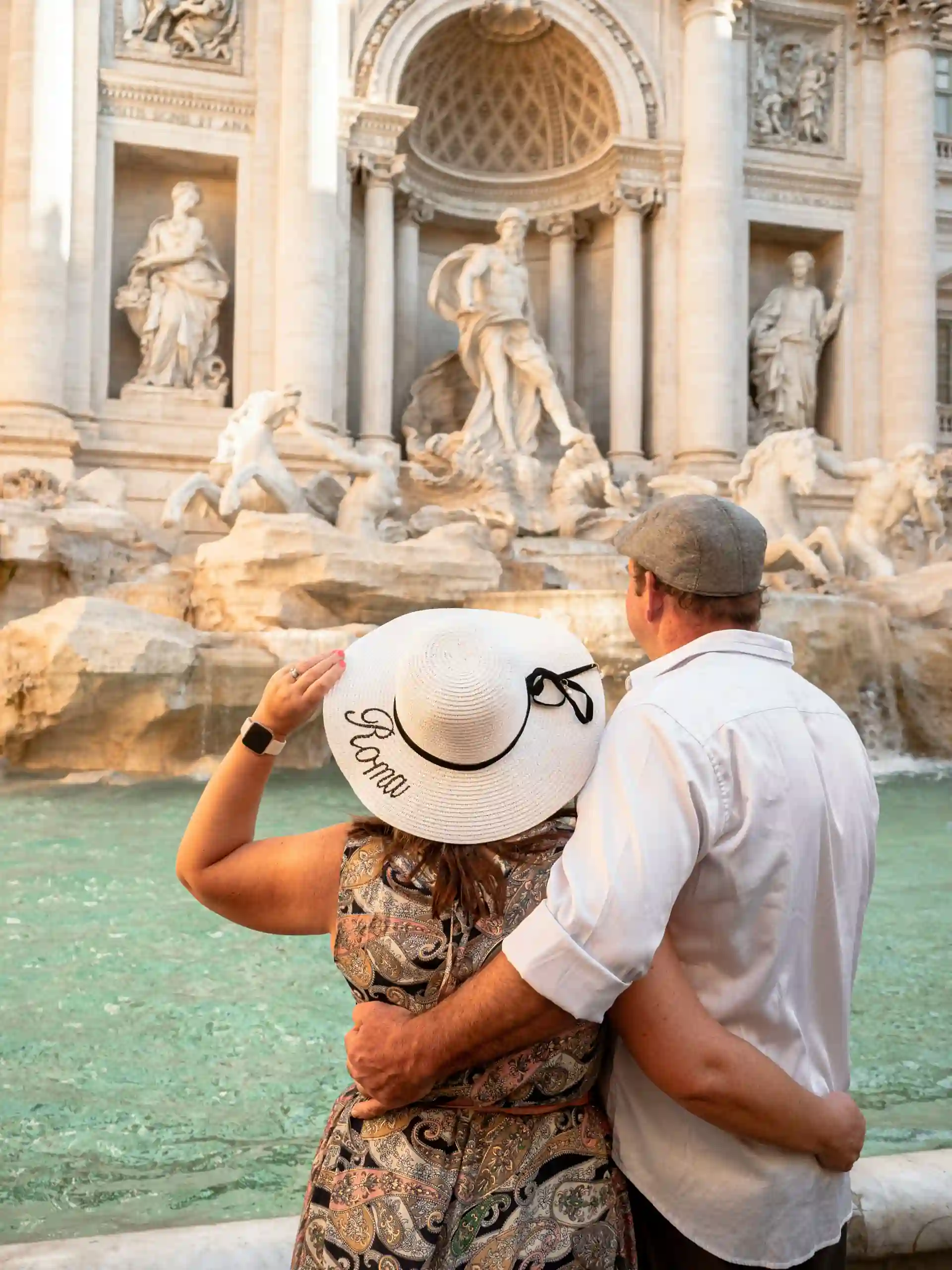
If you only have a weekend in Rome, a private golf cart tour is one of the most efficient and romantic ways to see the city. Evening routes that pass the Colosseum lit up at dusk tend to become the highlight of the entire trip.
Travelers with Mobility Considerations
Rome’s cobblestones can make walking difficult for some visitors. A guided golf cart experience, including accessible options for wheelchair users, opens up the full sweep of the city to travelers who would otherwise have to limit their itinerary.
How to Make the Most of Your Tour
A few simple choices can elevate a great tour into an unforgettable one:
- Time it well. Early morning brings cooler temperatures and quieter monuments; evening brings warm light on every facade.
- Go private. A private route lets you linger where you want and skip what doesn’t interest you, with your guide’s full attention.
- Add an experience. Many travelers pair their ride with a hands-on Italian cooking class, a wine tasting, or a visit to the Colosseum arena floor to deepen the day.
- Pack smart. The carts have roofs, but a hat, sunscreen, and a water bottle still make Roman summers more pleasant.
- Keep your camera ready. The carts stop wherever you like, so every photo opportunity is yours to capture.
Rome is the rare destination that rewards both the dreamer and the planner, and choosing the right way to explore it makes all the difference between a day lost to logistics and a day spent collecting memories. Picture yourself rolling up to the Colosseum as the sun dips low, gliding quietly through Trastevere’s lanes with a guide who grew up walking them, the whole Eternal City unfolding around you faster and easier than you imagined. Choose the route that speaks to you, pick your perfect hour, and let Rome reveal its greatest destinations one effortless mile at a time.
Rome Golf Cart Tour — Quick Facts
| Typical price | €50–€90 per person (private tours €150–€250 for up to 6 people) |
| Tour duration | 2–4 hours depending on route |
| Group size | Usually 2–6 people per cart |
| Departure point | Most operators depart near the Colosseum or Piazza Venezia — confirm at booking |
| Booking lead time | 48 hours minimum; 1 week ahead in June–August |
| Best time to go | Before 9am (cooler, fewer crowds) or early evening for golden hour light |
| What’s typically included | Licensed local guide, bottled water, hotel pickup in some cases |
| Where to book | Viator or GetYourGuide — filter by verified reviews and operator licence |
| Accessibility | Some operators offer accessible carts — confirm directly when booking |
One practical note before you book: Rome’s historic centre has restricted traffic zones, and not all cart operators are licensed to enter every area. When comparing tours, check that your operator is permitted to access the Vatican side of the city as well as the Forum — the best routes cover both. Book at least 48 hours ahead in summer; morning slots before 9am go fastest and reward you with cooler temperatures and thinner crowds at every stop.
Final Words
Rome doesn’t forgive wasted time. With three days or less, every hour spent navigating heat, traffic, and distance is an hour stolen from the city itself. A golf cart tour isn’t a shortcut — it’s a smarter allocation of a finite resource. You arrive at the Colosseum knowing its medieval theft story, at the Pantheon understanding its 1,900-year-old drainage system, at Trastevere before the crowds do. The landmarks haven’t changed. What changes is how much of them you actually absorb. Ferona’s family covered more ground in one morning than most visitors manage in two days. That’s the only metric that matters.
Frequently Asked Questions
1. How much does a golf cart tour in Rome cost?
Golf cart tours in Rome typically range from €50–€90 per person for shared group tours. Private tours covering up to six people cost between €150–€250 depending on route length and operator. Always book through Viator or GetYourGuide to compare verified pricing before committing.
2. Are golf cart tours in Rome worth it?
For visitors with limited time, a golf cart tour is one of the highest-value experiences in Rome. You cover six to eight major landmarks in a single morning without the exhaustion of walking miles on cobblestones. The addition of a knowledgeable local guide transforms each stop from a photo opportunity into a genuine historical experience.
3. How long does a golf cart tour of Rome take?
Most Rome golf cart tours run between two and four hours depending on the route and number of stops. Half-day morning tours are the most popular format, typically departing before 9am to beat the crowds. Some operators offer extended evening routes of three to four hours that include the Colosseum lit up after dark.
4. What is the best way to see Rome in one day?
A golf cart tour in the morning covers the major landmarks efficiently, leaving your afternoon free for the Vatican Museums or a neighbourhood walk through Trastevere. Pair it with pre-booked skip-the-line Colosseum tickets via coopculture.it to avoid queues eating into your day. Starting before 9am is non-negotiable in summer — crowds and heat both peak by mid-morning.
5. Can you do a private golf cart tour in Rome?
Yes — most Rome golf cart operators offer fully private tours for couples, families, or small groups of up to six people. Private tours allow you to customise the route, linger at stops that interest you, and skip what doesn’t, with the guide’s complete attention throughout. Expect to pay €150–€250 for the full cart rather than per person.
6. Are golf cart tours in Rome accessible for wheelchair users?
Some Rome golf cart operators provide accessible carts designed for wheelchair users, making the city’s major landmarks reachable without the cobblestone challenges that restrict standard walking tours. Availability varies by operator, so confirm accessibility requirements directly at the time of booking rather than assuming. Viator and GetYourGuide both allow you to filter tours by accessibility features.
7. What landmarks does a Rome golf cart tour cover?
A standard Rome golf cart route typically includes the Colosseum, the Pantheon, the Trevi Fountain, Piazza Navona, St. Peter’s Basilica, and the Trastevere neighbourhood. Some extended routes also include the Roman Forum, Circus Maximus, and Castel Sant’Angelo depending on the operator. Confirm the exact stops before booking, and check that your operator holds a licence to access Vatican-side restricted zones.
8. Is it better to walk or take a tour in Rome?
Walking and guided touring work best as complements rather than alternatives — walk within each neighbourhood, but ride between them. The distances separating Rome’s headline sights are deceptively large, and covering them on foot in summer heat leaves most visitors exhausted before midday. A golf cart tour handles the in-between distances efficiently, preserving your energy for the moments inside each landmark that actually deserve your full attention.